
This morning on the cover of a recent Outside Magazine, I saw the headline, “Sleep Tracking is Changing the Lives of Outdoor Athletes.” Color me a cynic for what follows.
Prior to reading that “lifechange” was possible through technology, I’d laced up my shoes and headed out for my Wednesday Workout in the still dark morning of a 32 degree day. Slower than I care to admit, I warmed up for two miles on a slightly frozen golf course before buckling down to 7×600 meter repeats at 5K pace. I had a Garmin on but I never looked at it. I Just hit the lap button at the beginning and end of every interval.
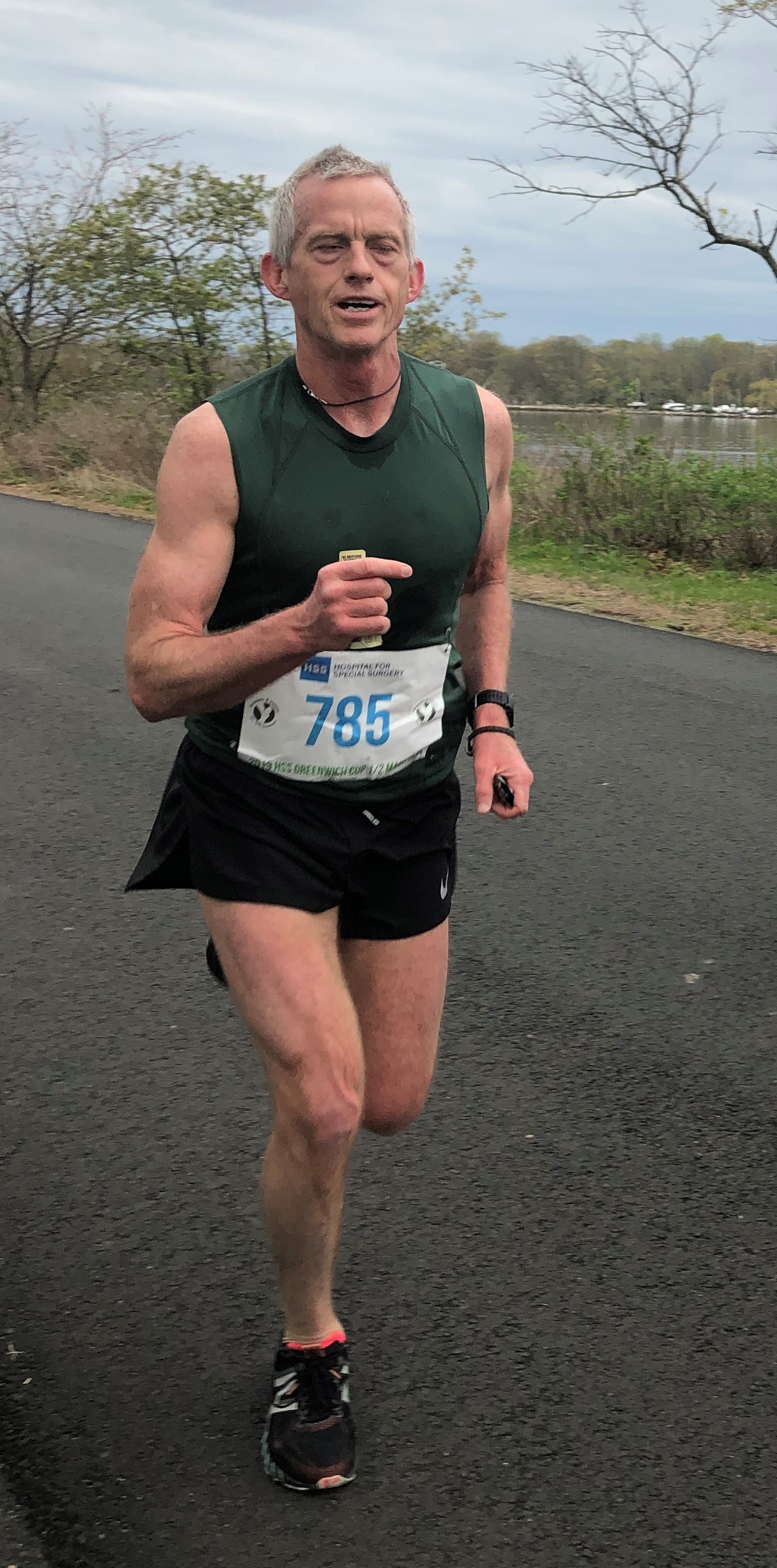
At almost 59, I don’t care too much about the pace. It’s more how I feel, if my mind is free and I’m letting my body do the work. Most of the time, if I’m thinking at all, it’s to ask myself if I’m totally present in what I’m doing. In this mode, I had the awareness to hear a flock of water birds fly over me on one repeat. Their wings were rustling in the dark, my ears told me they’d gently settled in the pond to my right. A simple thing but quite thrilling at that hour, it made me glad to be alive.
Several years back, I bought my first Garmin and it blew me away with the information it could glean while I was on the run. The ease of uploading to Strava was a joy. Seeing my effort broken down by mile was enlightening. And the GPS mapping was quite good though problematic in the woods. But did it make me faster having all this info? It did not.
The only real short cut I know of in the running world is doping. You can certainly get smarter, there are some workouts that may be more efficient than others, everyone can learn something from a solid nutrition approach and understanding the importance of rest is non-negotiable, especially as you age. Tech can help in all of these areas but only as a spice, it’s not close to providing the sustenance found in a full meal.
And for the endurance diner, that meal is the non-postable reality of consistent work.
At nine years old, I headed out on the streets of summertime Chatham, MA decked out in gray sweats with a towel wrapped around my neck. My inspiration for doing so was a movie called, “Rocky.” Though I had no interest in boxing, the running scenes of Mr Balboa in the early morning, captured my imagination and spurred on what would be my lifelong love affair with distance and speed (in relative terms). Over the past 50 years, I’ve had a lot of practice but haven’t really learned much on what works when it comes to improving. Not for a lack of trying and not because I’m an idiot but simply because running is not terribly complicated. These basic weekly principles have worked really well for me:
- Try and long run once
- Do some speed work
- Get a couple of mid distance runs in
- Don’t kill yourself with it but do some strides
- Run quietly
- Change surfaces on a regular basis
- Back off when something hurts
- Stretch sometimes
- Do a bit of lifting
- Cross train when you’re bored
- Give yourself over to the spiritual possibilities
- Do it with a friend(s)
- Change things up when it’s a chore
I once read that despite the profound amount of literature there is around AA (truly lifechanging ), it’s really a very simple program. The writers just choose to tell you the same thing over and over again in different ways. When it comes to staying sober, “Don’t drink, go to meetings, ask for help” pretty much covers the basics for living free of booze.
But I digress.
Being an athlete is not complicated, nor is the path to enjoying relentless, intentional movement. Don’t let some marketer fuck it up for you. Revel in the simplicity, use tools as necessary but manage expectations on what they can deliver.

 Something Short of Paradise
Leave a reply to hojmatt Cancel reply