
In the end, the result seemed preordained. At the base of the final hill in Bushnell Park, Drew dropped the hammer on his closest rival and powered up the incline with a subtle but emphatic surge. As had been the case all season, here at the State Championship, he crossed the line in first place.
After celebrating with his teammates and speaking with his coach, we found each other in the uneven mix of sweating, exhausted athletes and beaming/concerned parents, friends and coaches. I pulled my son to me and as our heads came side-by-side he said, “One whole year to make up a single second.”
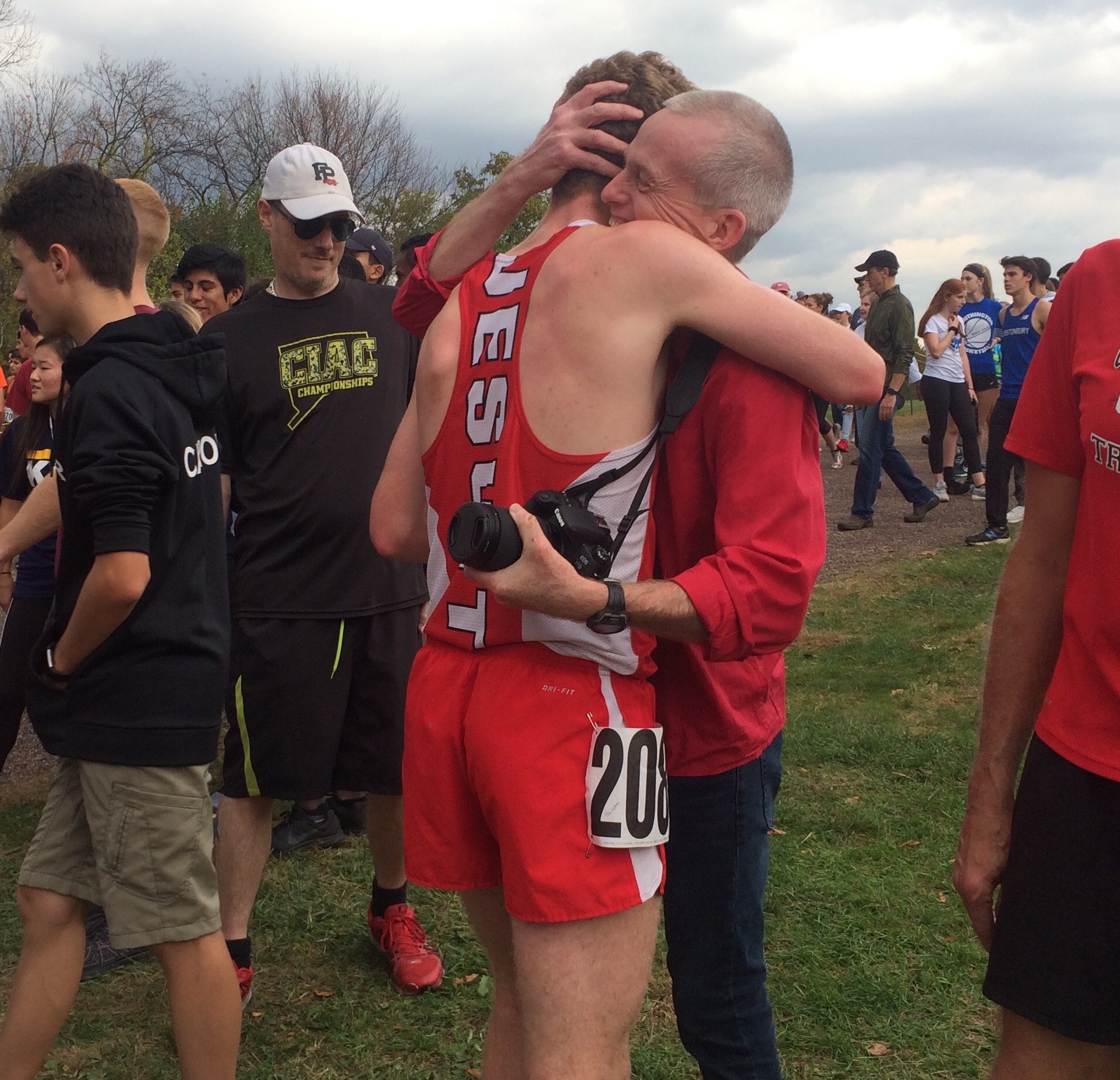
The year before one second had prevented Drew from being a two-time State champion. For 365 days, he’d allowed that defeat to motivate his training, give him focus and a passion for leaving a mark at his school. After this State Championship, he went on to win New Englands and place 8th at the Footlocker National meet in San Diego. For years to come, tribute to his accomplishments would hang from the rafters of his alma mater’s athletic buildings.
In 12 step parlance, there are three areas of recovery: spiritual, mental and physical. 36 years ago, I first walked into the rooms of AA. Mentally and spiritually, I struggled with many of the concepts and my own conviction that practicing the principles would make me better. However, I thoroughly embraced the idea of recovering physically. At just 21, I had not drank or drugged for a huge amount of time but I had pursued intoxication on an epic level and especially in the last year of my abuse, the physical toll had become almost as painful as the shame and guilt resulting from my behavior. A devoted athlete, I had punished my body with cocaine, pharmaceuticals, psychedelics and untold gallons of alcohol. It was not unusual for me to wake up with monstrous hangovers that included serious kidney, liver and heart pain. You know you’re an alcoholic when your chronic bad back is caused by toxic kidneys.
So, while the best approach to AA is realized by those that assiduously follow the prescription for spiritual and mental recovery, I focused on my physical rebirth. In my first three months of sobriety, I lost 25 pounds and became a dedicated runner, tennis player and weightroom denizen. Over the subsequent years, my passions for fitness flowed into different areas but with the exception of the early years of my kids’ lives, it never took a backseat to any other pursuit including work, social standing or even attendance at 12 step meetings (to my detriment).
In recent years, I’ve thought quite a bit about my love of fitness. It hasn’t made me rich or really brought in a harvest of fellowship. There are a few close friends I’ve made along the way but the truth is most guys struggle to get their head around long runs and century rides. But for me, fitness has kept trouble at bay long enough to let those other two areas of recovery get better. Mentally I’m doing alright and these days spirituality is growing into my deepest interest. Yes, that probably has something to do with being closer to the end than the beginning but the point is getting interested at all. Prayer and meditation is a fuel I wish I’d embraced more intensely long ago.
One of the basic tenets of the program is that we dedicate ourselves to serving others. I haven’t been great at that either. But when it comes to physical recovery, I have succeeded in passing on “what was so freely given to me.” My son loves to run. And while I claim no part to his success at the sport, I definitely passed on to him the joy that can be found in the wilds of our aerobic frontier.
In my sobriety, like so much of my life, I’m pretty much a B student. There’s nothing wrong with that. If I worked harder, stayed more focused I’d probably be better for it. But I haven’t. Though it is nice to know that some of the physical recovery I shared with my family ended up as a significant success for my son.


Leave a Reply